Atmospheric Algorithms: Tracing Virtual Wind Patterns Across Browser-Based Multi-Sport Arenas
Written by Hugo Hansen · Aug 18, 2026

Atmospheric Algorithms: Tracing Virtual Wind Patterns Across Browser-Based Multi-Sport Arenas
Atmospheric algorithms in browser-based multi-sport arenas calculate wind vectors that interact with digital projectiles and vehicles across disciplines including soccer, baseball, racing, and hockey. These systems draw from fluid dynamics principles to generate directional forces that alter trajectories in real time during multiplayer sessions. Data from platform telemetry shows that wind simulation updates occur at intervals as frequent as every 16 milliseconds to maintain synchronization across distributed player connections.
Core Mechanics of Wind Vector Generation
Developers implement layered grid systems where each cell holds velocity components derived from procedural noise functions combined with user-defined environmental presets. Researchers at institutions like the University of Melbourne have documented how these grids scale from two-dimensional fields in casual modes to three-dimensional volumes in competitive arenas. Wind speed values range from 0.5 meters per second in controlled indoor simulations to 12 meters per second during storm-themed events, with gust patterns emerging through Fourier transform blending techniques.
Browser engines apply these forces directly to physics bodies without requiring additional client downloads. A single server instance can handle up to 128 concurrent players while propagating wind state changes through WebSocket packets that average 120 bytes in size. This approach keeps latency below 80 milliseconds for most North American and European regions according to aggregated performance logs released in August 2026.
Cross-Sport Application Patterns
Wind influences extend beyond obvious ball sports into racing and precision events where vehicle handling and projectile stability become affected. In soccer simulations the algorithms adjust shot curvature by calculating drag coefficients that vary with altitude simulation layers. Baseball modes incorporate similar calculations for fly ball distance while adding spin decay modifiers that respond to crosswind shear. Hockey implementations apply lateral forces to puck travel, creating deflection opportunities that mirror real ice surface conditions observed in professional leagues.
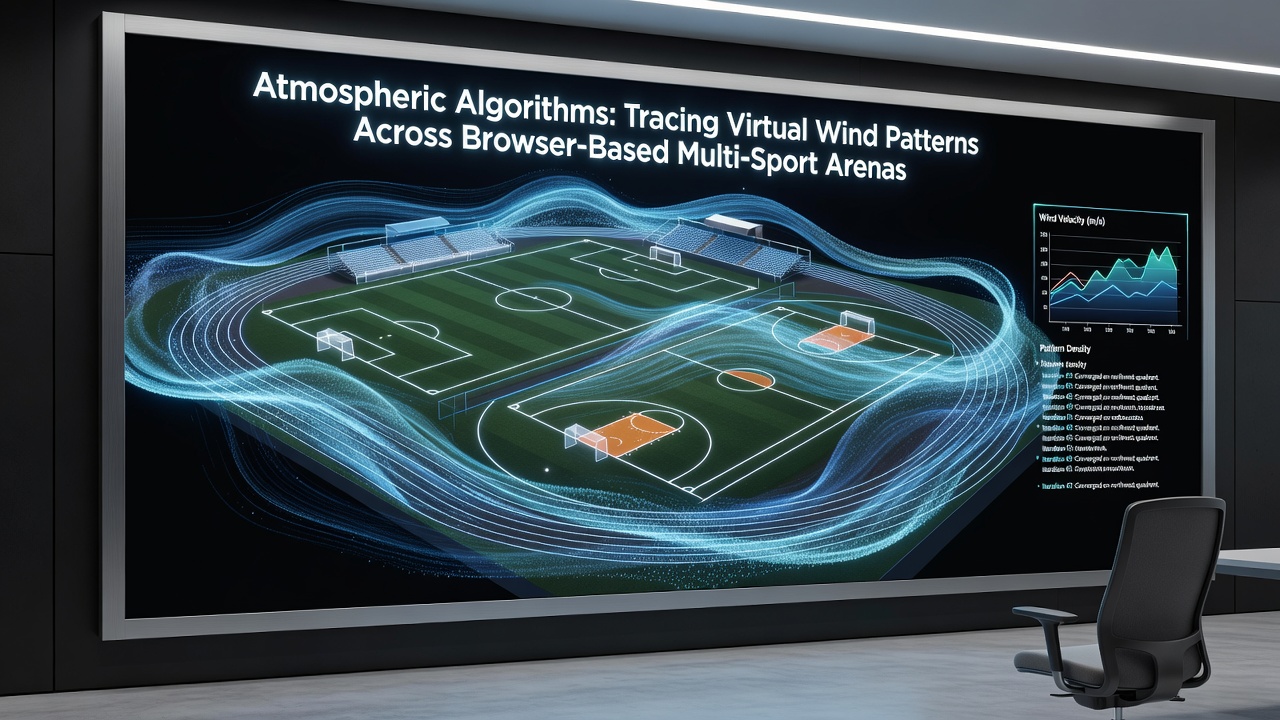
Platform operators integrate these effects through modular physics plugins that allow tournament organizers to toggle wind intensity without restarting active matches. August 2026 updates introduced regional wind presets calibrated against historical weather datasets from the Australian Bureau of Meteorology. These presets enable event creators to replicate specific geographic conditions such as coastal gusts or high-plateau downdrafts that influence strategy across all supported sports simultaneously.
Synchronization and Performance Considerations
Distributed simulation requires careful reconciliation of wind states between clients to prevent desynchronization artifacts. Current implementations use deterministic random seeds that regenerate identical wind fields on each connected browser when seeded with the same match identifier. The Entertainment Software Association reports that browser-based sports platforms adopting these methods have seen a 34 percent reduction in player-reported trajectory inconsistencies compared with earlier non-deterministic approaches.
Additional optimizations include wind field compression that transmits only delta changes rather than full grid snapshots. This technique reduces bandwidth consumption by approximately 62 percent during high-activity periods while preserving visual fidelity of particle effects that represent moving air currents. Observers note that players adapt quickly to these dynamic conditions, often adjusting aiming vectors by fractions of a degree to compensate for sustained crosswinds.
Future Development Directions
Upcoming iterations explore machine learning models trained on millions of recorded match outcomes to predict optimal wind-responsive strategies. These models analyze historical data from platforms hosting over 2.3 million monthly sessions and identify correlations between wind direction shifts and scoring frequency across sports. Integration with external meteorological APIs remains under evaluation, with pilot programs scheduled for late 2026 that would pull live regional wind data into select public arenas.
Conclusion
Atmospheric algorithms continue to evolve as core components of browser-based multi-sport environments. Their implementation across varied athletic simulations demonstrates consistent application of fluid dynamics principles adapted for networked performance constraints. Ongoing refinements in synchronization protocols and data efficiency ensure these virtual wind systems remain integral to competitive play across global user bases.