Cognitive Load Dynamics in Unified Browser Athletic Simulators: Transitions Between Precision Putting and High-Speed Puck Handling
Written by Paul Hartmann · Aug 28, 2026
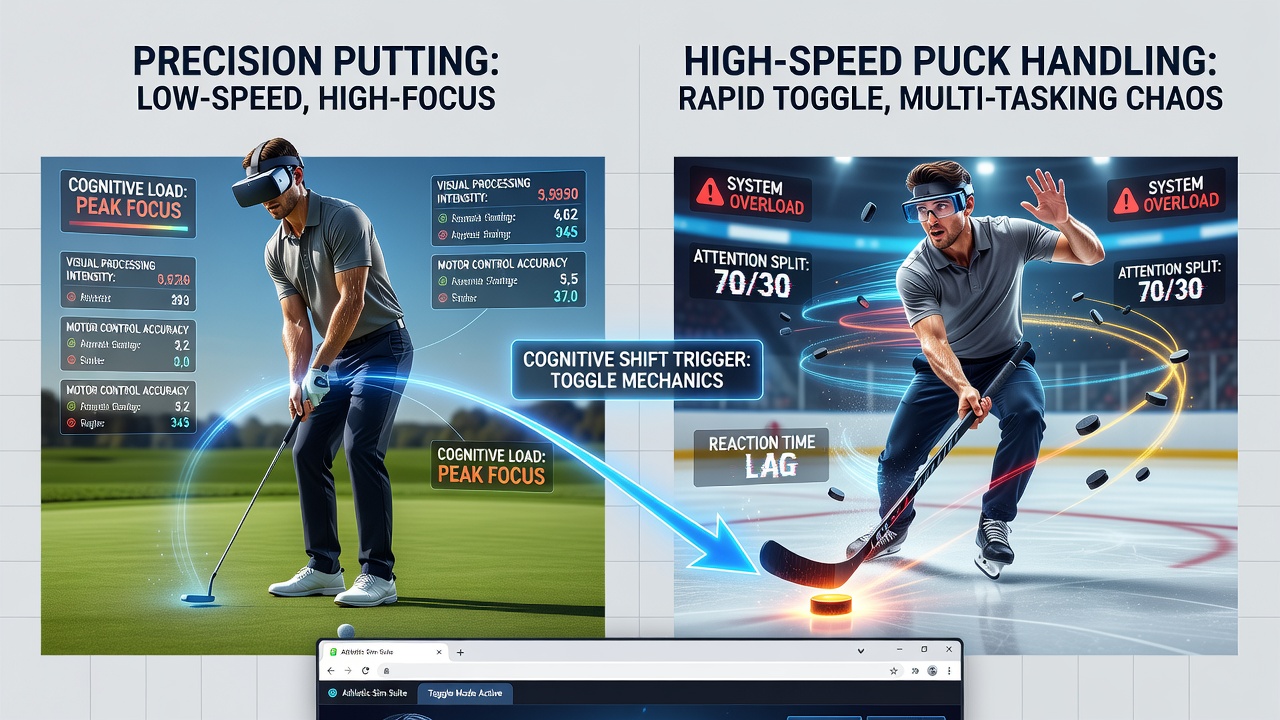
Cognitive Load Dynamics in Unified Browser Athletic Simulators: Transitions Between Precision Putting and High-Speed Puck Handling
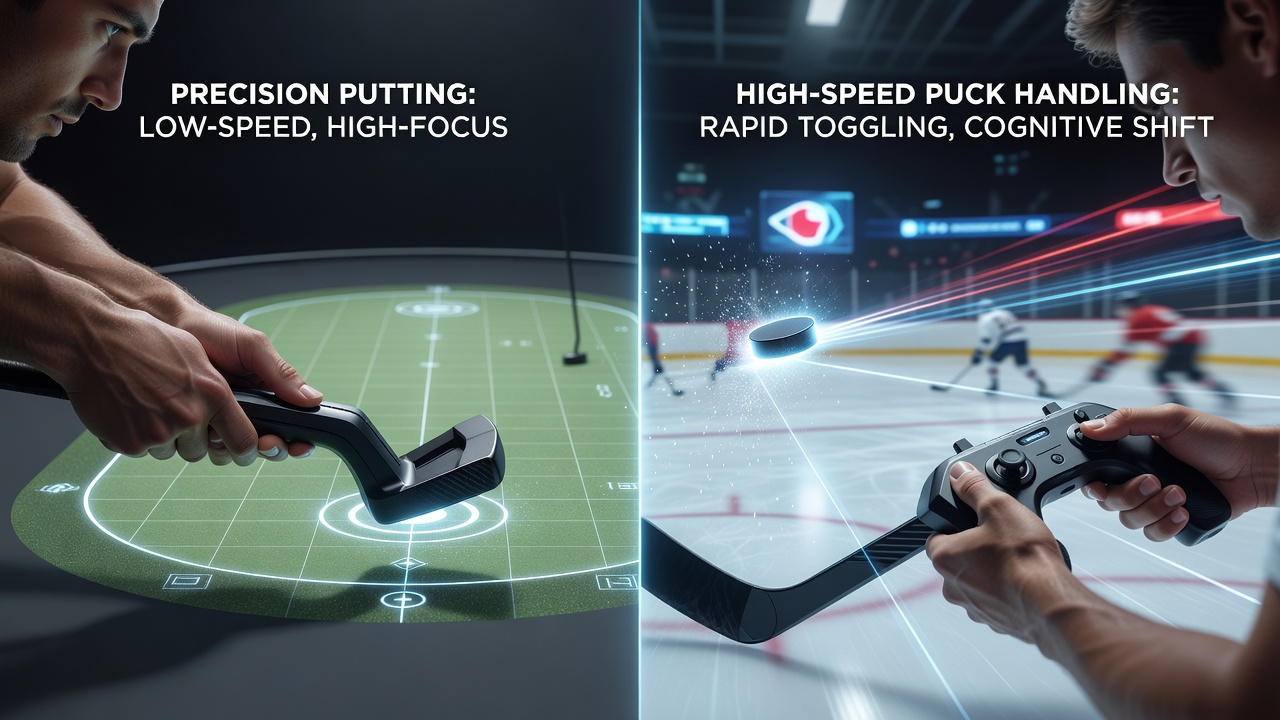
Unified browser athletic simulators integrate multiple sports mechanics into single platforms, and data from August 2026 shows increased player engagement with modes that require rapid switches between precision putting and high-speed puck handling. These systems load distinct motor and attentional demands onto users, where putting emphasizes steady aim and subtle force adjustments while puck handling demands quick directional changes and collision avoidance. Research indicates that such toggling activates separate neural pathways for fine motor control and rapid decision making, leading to measurable shifts in cognitive load as players adapt between tasks.
Core Mechanics and Their Attentional Requirements
Precision putting in these simulators relies on calibrated input for direction and power, often using mouse or touch gestures that simulate club face alignment and swing tempo. In contrast, high-speed puck handling involves continuous key or controller inputs for acceleration, dekes, and passes amid moving opponents and boards. Observers note that players must maintain separate mental models for each, with putting sessions drawing on sustained focus loops while puck sequences trigger reactive response chains. Studies from the University of Toronto reveal that transitions between these modes produce temporary spikes in working memory usage, as the brain reallocates resources from deliberate aiming circuits to anticipatory tracking systems.
Patterns of Load Shifting During Play Sessions
Platform analytics from 2026 document that sessions lasting over fifteen minutes show repeated load fluctuations, with putting segments correlating to lower heart rate variability and puck handling segments aligning with elevated reaction times. When players toggle, residual motor programs from one mechanic can interfere with the other, such as overly forceful inputs carrying over from slapshots into putts. Evidence from simulation logs indicates that experienced users develop predictive strategies, anticipating mode changes and pre-adjusting grip tension or cursor sensitivity to reduce interference. Those who've studied cross-sport performance in digital environments find that practice in isolated drills shortens adaptation periods, though combined sessions still register higher overall mental effort than single-mechanic play.
Measurement Approaches and Supporting Data
Researchers employ dual-task paradigms and eye-tracking within browser environments to quantify these shifts, tracking fixation durations on target lines during putting versus puck trajectories during handling. Figures from the Australian Institute of Sport's gaming research division indicate that average adaptation time after a toggle reaches 2.3 seconds for novice participants and drops below one second for those with over fifty hours of combined exposure. Physiological sensors integrated into some platforms record corresponding changes in pupil dilation and skin conductance, confirming elevated cognitive demand during the switch itself rather than within either individual mechanic. And because these simulators run in standard browsers, large-scale telemetry allows aggregation across thousands of users without specialized hardware.
Training Implications Across User Groups
Coaching tools built into these platforms now include load-monitoring overlays that highlight periods of high transition cost, allowing users to schedule rest intervals or focus drills. Data shows younger participants adapt faster to the dual demands, while older adults exhibit longer recovery windows between precision and speed phases. Industry reports from the International Game Developers Association note that developers incorporate adaptive difficulty scaling, easing puck speed or widening putt targets temporarily after detected toggles to maintain engagement. One study revealed that structured training sequences alternating short putting bursts with puck rallies produce more balanced skill retention than random interleaving.
Platform Design Considerations
Engineers address these dynamics through unified physics layers that preserve consistent input mapping across sports while permitting sport-specific calibration curves. Visual cues such as color-coded reticles or audio feedback tones help signal impending mode changes, reducing surprise load spikes. According to findings published by the Canadian Centre for Digital Gaming Research, platforms that provide preview windows of the upcoming mechanic achieve lower reported frustration metrics during extended sessions. The reality is that seamless browser performance depends on efficient resource allocation, since simultaneous rendering of green surfaces and ice textures plus real-time physics calculations can compound the mental overhead already present in the gameplay loop.
Conclusion
Unified browser athletic simulators continue to evolve their handling of cognitive transitions between precision putting and high-speed puck handling, supported by ongoing telemetry and academic investigation. Data gathered through August 2026 demonstrates consistent patterns of load shifting that developers and researchers track to refine user experiences across skill levels. These systems illustrate how digital environments can replicate and measure the mental flexibility required when distinct athletic skills intersect within shared interfaces.