Synchronization Shadows: How Network Delays Reshape Decision Windows Across Browser-Based Athletic Simulations
Written by Jordan Sullivan · Jul 23, 2026
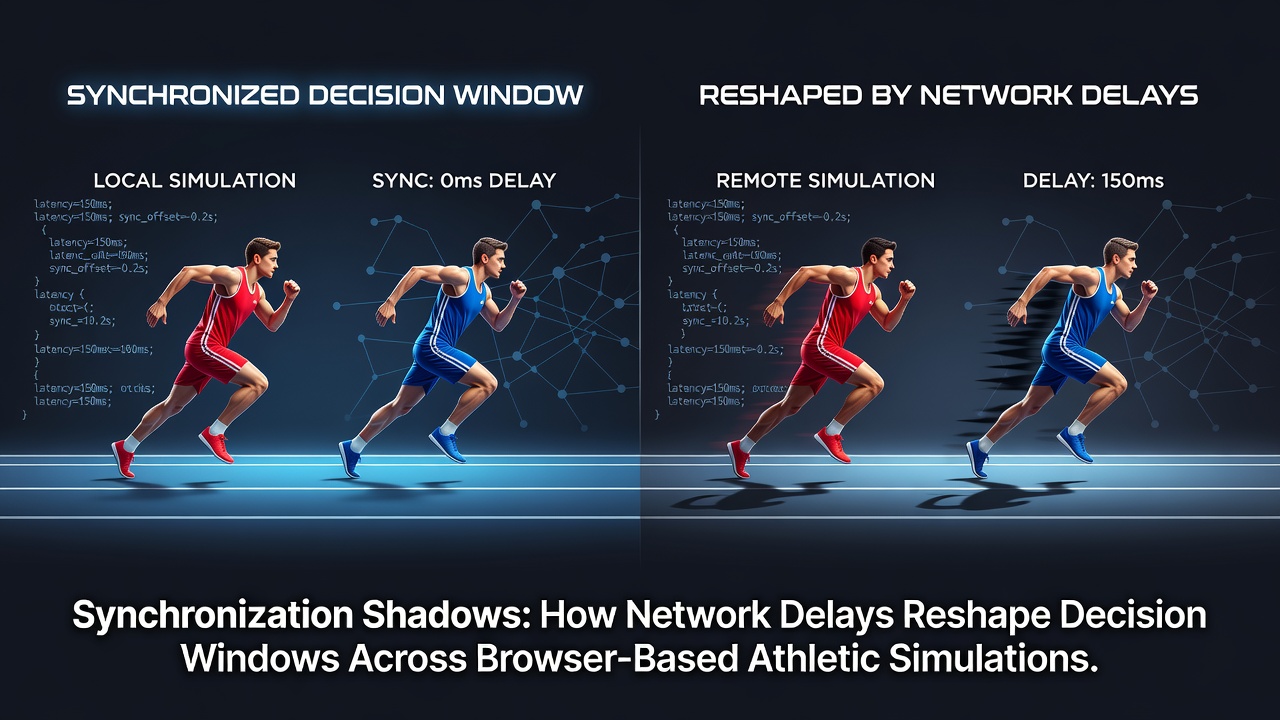
Synchronization Shadows: How Network Delays Reshape Decision Windows Across Browser-Based Athletic Simulations
Browser-based athletic simulations rely on precise timing for actions like swings, kicks, and sprints, yet network delays create synchronization shadows that shift available decision windows for players across connected sessions. These shadows emerge when packets carrying input data arrive late, forcing engines to interpolate positions and outcomes while users adjust strategies mid-action.
Mechanics of Latency in Shared Simulation Environments
Network delays arise from variable factors including routing paths, server load, and client hardware differences, and researchers at institutions like the University of Waterloo have documented how even 50-millisecond variances alter reaction thresholds in multiplayer setups. Data from the Federal Communications Commission shows average broadband jitter in North American households reaching 20 to 40 milliseconds during peak hours in 2025, which compounds when multiple users engage the same athletic simulation instance. Game engines compensate through client-side prediction and server reconciliation, yet these techniques leave residual desynchronization that players perceive as shifted timing cues.
Decision windows narrow when inputs queue behind delayed packets, and studies indicate that participants in browser-hosted soccer penalty simulations lose up to 15 percent accuracy once round-trip times exceed 120 milliseconds. The same patterns appear in baseball batting modules, where pitch recognition intervals compress because visual feedback lags behind actual ball trajectories calculated on remote servers.
Reshaping of Action Thresholds Across Sports Genres
Observers note that racing starts in browser simulations experience pronounced compression when latency spikes, since countdown synchronization must account for staggered client clocks. Similar effects surface in hockey slapshot sequences, where deflection calculations depend on synchronized puck states that drift under inconsistent packet delivery. Figures from the Entertainment Software Association reveal that over 60 percent of browser multiplayer sessions in 2025 involved participants distributed across regions with differing infrastructure quality, amplifying these threshold shifts.
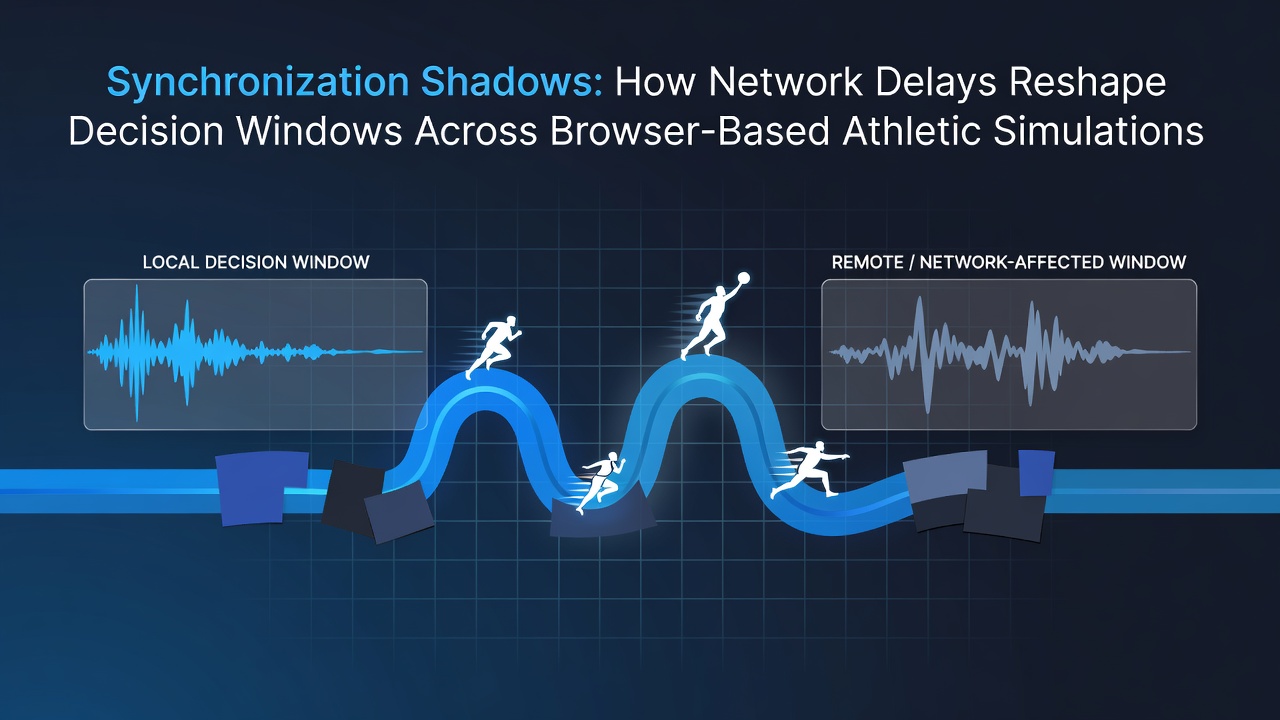
One analysis of tennis serve mechanics demonstrated that return windows contract by approximately 80 milliseconds for every additional 30 milliseconds of network delay, prompting players to pre-commit to shots earlier than they would under ideal conditions. Golf putting modules show parallel behavior, with line adjustments occurring before full terrain data resolves across all clients. These adjustments accumulate because each participant operates within a slightly offset temporal frame, and the simulation must reconcile divergent states without halting play.
Compensation Protocols and Their Limits
Developers deploy techniques such as lag compensation buffers and entity interpolation to mask delays, while the European Telecommunications Standards Institute has published guidelines on acceptable synchronization tolerances for real-time interactive applications. Yet these protocols cannot eliminate shadows entirely when bandwidth contention or packet loss exceeds engineered thresholds. Research from the Australian Institute of Sport applied to digital training environments indicates that athletes accustomed to physical timing struggle to recalibrate when simulation decision windows fluctuate unpredictably.
As of July 2026, several platforms have integrated adaptive tick rates that scale with measured latency, allowing servers to prioritize critical action packets for batting or kicking events. This approach reduces but does not remove the need for players to anticipate shadows, since reconciliation still occurs after the fact.
Cross-Platform Patterns in Browser Athletic Simulations
Patterns repeat across titles that blend multiple sports because shared physics engines propagate timing offsets uniformly. A delay affecting a soccer ball trajectory calculation can influence linked baseball outfield reads when the same backend handles both modules. Data aggregated by regional network monitoring bodies shows that sessions spanning three continents encounter cumulative drift exceeding 200 milliseconds on average, forcing broader decision windows to overlap with subsequent actions.
Engineers address these overlaps through priority queuing that favors input events tied to scoring opportunities, yet the underlying synchronization challenge persists as participant numbers grow. Those who have examined session logs report that peak concurrency periods coincide with the most pronounced shadow effects, particularly during evening hours in mixed urban and rural user bases.
Conclusion
Network delays continue to reshape decision windows in browser-based athletic simulations through persistent synchronization shadows that affect timing precision across genres. Protocols evolve to mitigate these effects, and geographic data sources highlight infrastructure variations that sustain the phenomenon. Continued measurement and adaptive design remain central to maintaining consistent action thresholds as participation expands.